Warhammer 40,000: Dawn of War 4 creative director explains how King Art balances RTS factions 'organically' so 'players who do not know the faction still intuitively play them the right way' — 'This i
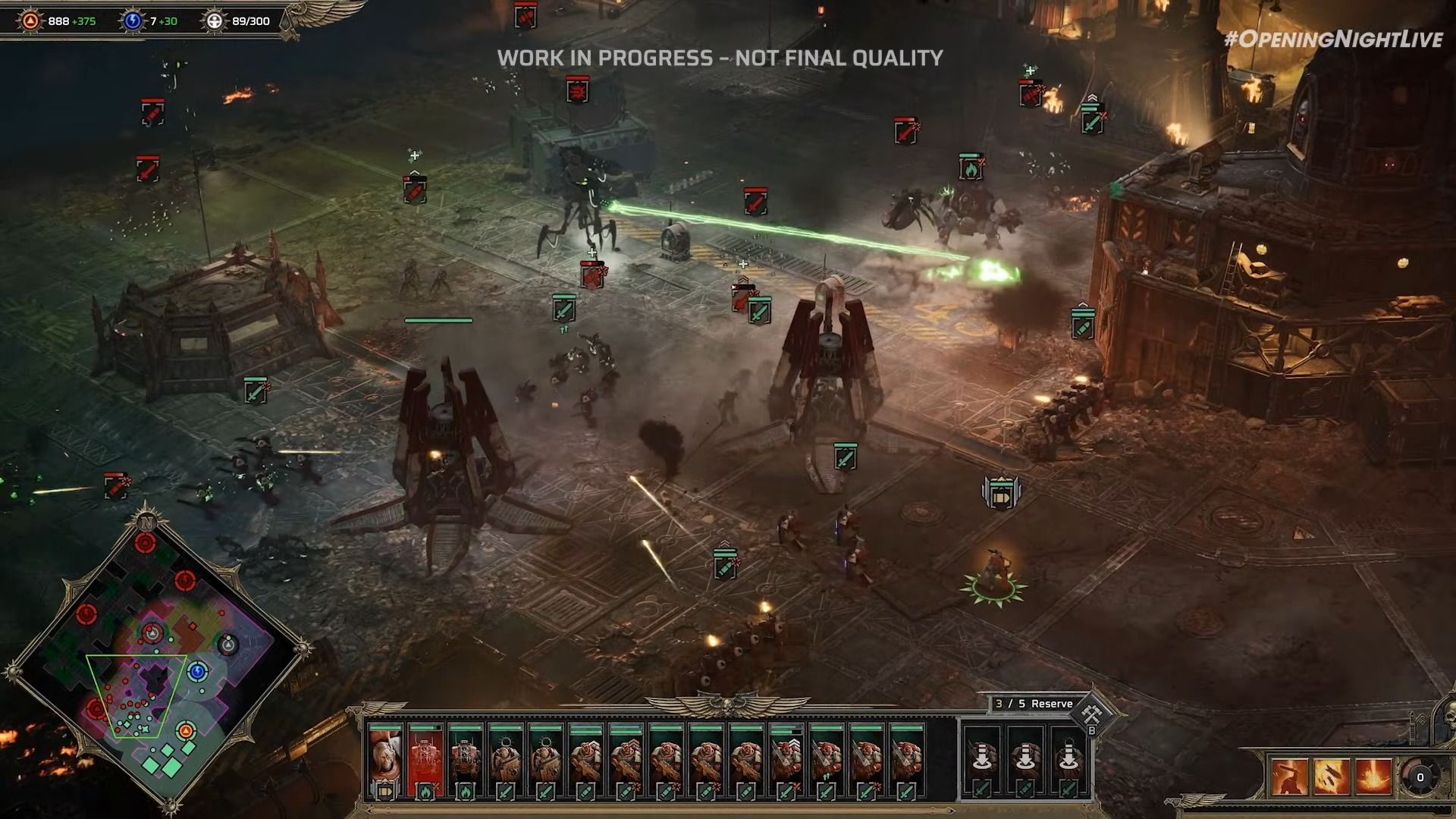
- Warhammer 40,000: Dawn of War 4 creative director Jan Theysen explains how King Art Games balanced the four playable factions
- Theysen says the team starts by identifying the "feeling" of each faction, especially for newcomers
- He says King Art does a lot of testing with AI bots, but things can still change when players get their hands on the game
Warhammer 40,000: Dawn of War 4 creative director Jan Theysen has explained how King Art Games balanced the four playable factions in the real-time strategy (RTS) game without compromising their fundamental traits and abilities.
Speaking in an interview with TechRadar Gaming, Theysen said it's a "super challenging" process balancing Space Marines, Orks, Necrons, and Adeptus Mechanicus, because it's "10s of 1000s of permutations of different units who can fight each other" with different equipment and abilities, and so the studio first focused on trying to identify the "feeling" of each faction.
"What we do is we try first to get the feeling for each of the factions; how is this faction supposed to feel? And then we try to do it in a way where players who do not know the faction still intuitively play them the right way," Theysen explained.
"For example, if you have Space Marine units and the Space Marine units are super, super expensive, and you can upgrade them with a lot of different stuff, you feel different about them than, let's say, Ork units that are dirt cheap, and you have a lot of them from the get go. But they also die pretty quickly, right?"
The creative director continued, saying "naturally and organically" players who play Orks, for example, will care a little less about individual units and will use them against bigger mobs, while Space Marine players will "organically" care more about individual units and try to keep them alive longer.
After this first phase is achieved, Theysen said anyone who plays the campaign will understand what's going on lore-wise, and then King Art needs to figure out the fundamental ideas of early-, mid-, and late-game units. Then comes the long testing phase.
"We need units that can do certain things, and all of that stuff is baked in," he said. "But as soon as we have that, then we start to let them play against each other, fight each other. We do this ourselves, of course, but we also have just [have] in-game AI play each other and give us statistics: who wins which combination on which map and so on.
"And then we start adjusting the dials a little bit and say, okay, the overall win rate for Necrons is too strong. Can we make them weaker, for example, without losing this core identity or this core feeling that we have?"
Theysen explained that "this is also an ongoing process, to be honest" because "you can do this as much as you want" but "as soon as real players get this into their hands, they come up with stuff you never thought about."
"If [players] do it like this, then actually there is an unfair advantage," he said. "So we have to somehow fix that."
Warhammer 40,000: Dawn of War 4 launches on PC on December 3, and Theysen has also suggested that the game could eventually come to console while discussing which hero mechanics and UI features it borrowed from Dawn of War 2 and 3.