How Oldcastle APG Automates 13 Million Order Lines with Amazon Bedrock
This post was co-written with Avdhesh Paliwal of Oldcastle APG.
Oldcastle APG uses Amazon Bedrock to automate 13 million manual order lines, reducing order processing time from hours to minutes. In the first two weeks of production, the system processed over 10,000 order lines with a 95% automation rate. A team of 2 developers and 1 architect deployed the solution in 8 weeks.
Before the AI-powered solution, the order in-take process was entirely manual. Customer orders arrived as emailed PDFs, faxes, or scanned images, each formatted differently. CSRs had to read each order, identify the customer, look up products in the ERP, and re-key every line item one field at a time. At scale, this created order backlogs that delayed confirmations. The manual process also introduced errors, such as mis-keyed quantities, incorrect SKUs, and transposed pricing, that propagated into fulfillment and invoicing.
Oldcastle APG, one of the largest suppliers of architectural products and construction materials in North America, faced this challenge head-on. More than 200 CSRs were entering roughly 13 million order lines per year by hand into Infor M3. The company partnered with Amazon Web Services to build an AI-powered solution that processes customer orders automatically.
The challenge
Oldcastle’s order entry process had three compounding issues:
- Volume and variability: Orders arrived as multi-page PDFs with up to 100 line items each, in highly variable formats. No two purchase order templates looked the same.
- Manual effort at scale: 200+ CSRs spent roughly 4+ hours per person per day transcribing order details into the ERP. Order entry had become the single largest consumer of CSR time.
- Downstream errors and delays: Manual transcription introduced pricing, quantity, and SKU errors that propagated into fulfillment and invoicing. During peak periods, backlogs delayed the entire supply chain.
The solution: AI-powered order entry with Amazon Bedrock
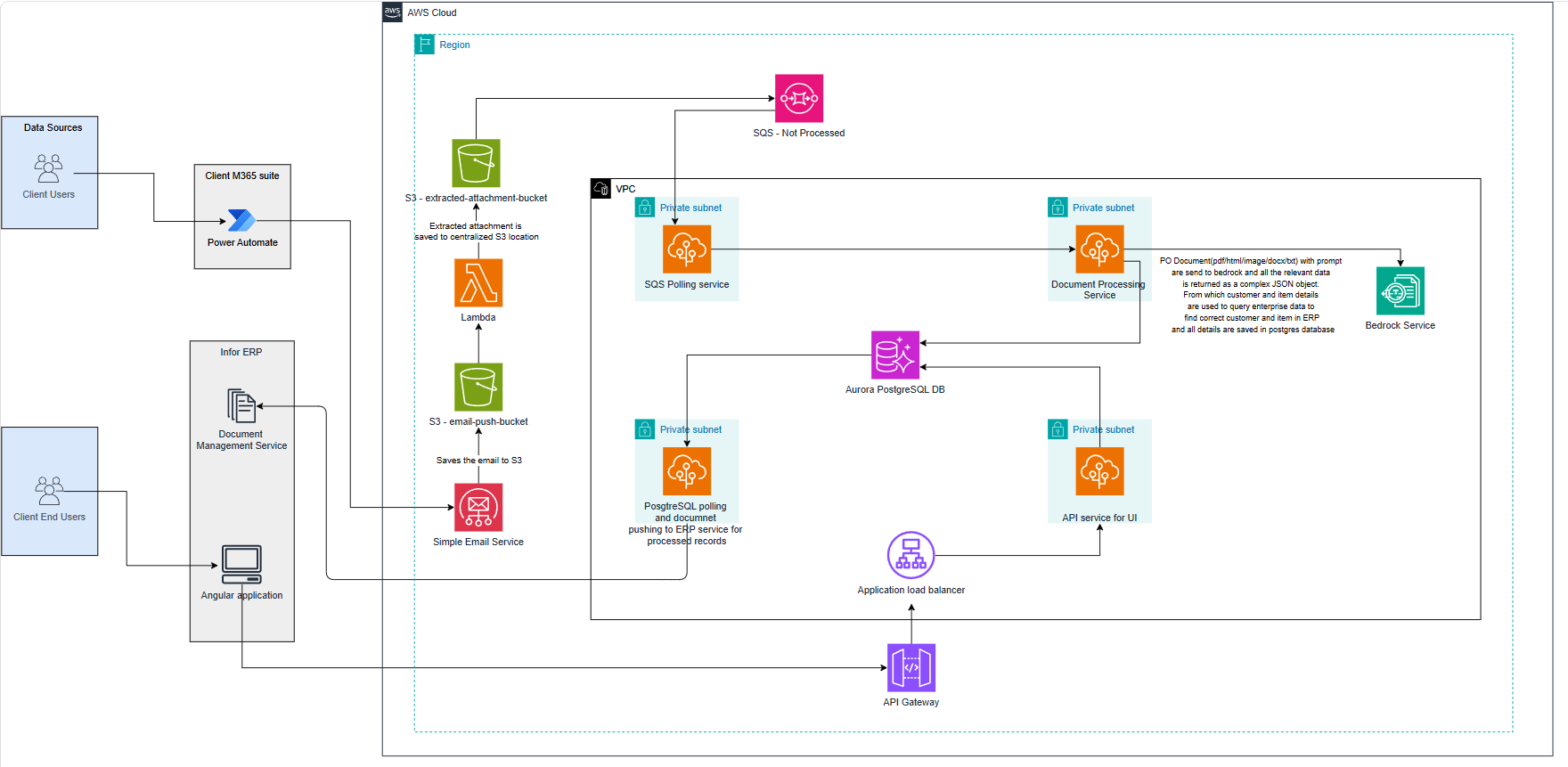
Working with AWS Solutions Architects, Oldcastle built an event-driven pipeline using Amazon Bedrock with Anthropic’s Claude Sonnet 4.6. The pipeline reads and interprets incoming purchase orders directly. No manual data entry is required.
Figure 1: Automated order entry architecture
At a process level, the pipeline moves through six stages:
Ingest: Customer emails with order attachments (PDF, image, HTML, or text) are captured via Amazon Simple Email Service (Amazon SES) and Microsoft Power Automate. The attachments are then stored in Amazon Simple Storage Service (Amazon S3).
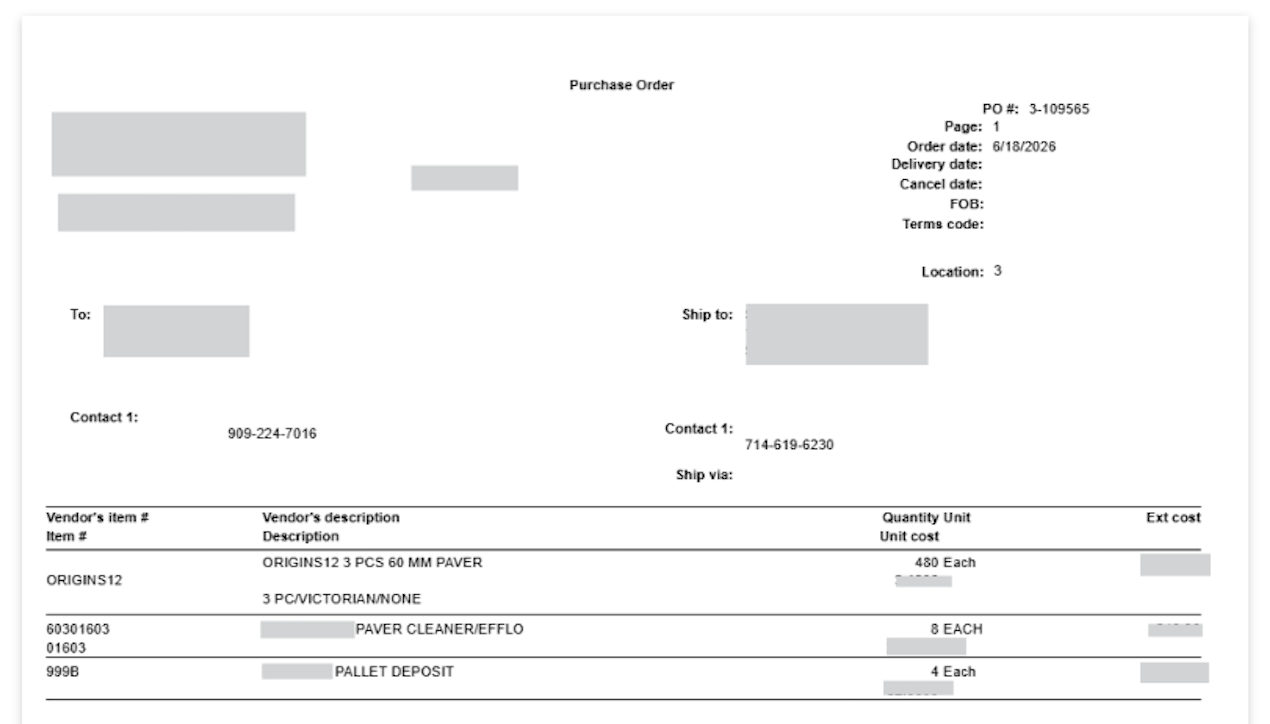
Figure 2: Example of customer’s PO
Extract: Amazon Bedrock reads the order document in multiple formats and languages. It returns the relevant fields (customer, PO number, ship-to address, line items, quantities, pricing) as structured data.
Match: The extracted details are matched against Oldcastle’s enterprise data in Amazon Aurora PostgreSQL-Compatible Edition using fuzzy similarity search. This identifies the correct customer and resolves each line item to the right ERP product.
Verify: A CSR reviews the matched order in a verification dashboard, confirming the customer and checking each line against ranked suggestions. The system learns from every correction. The following view shows the extracted order beside the original purchase order, so CSRs can confirm each line at a glance.
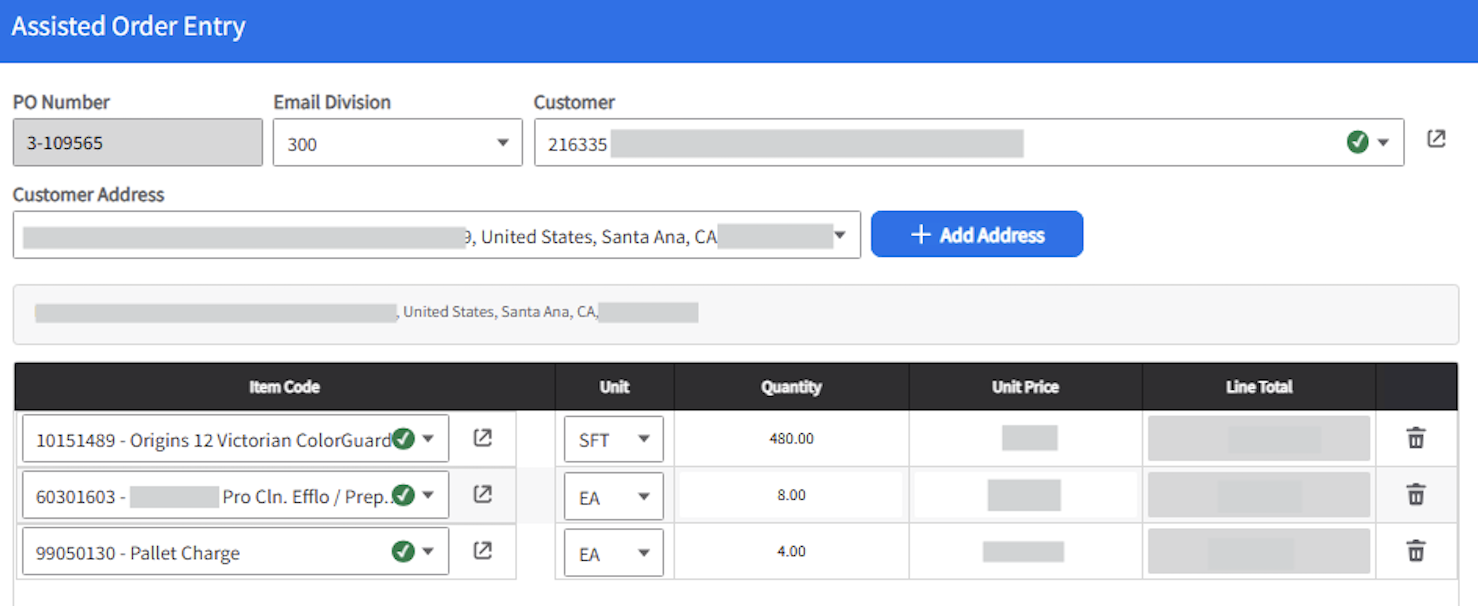
Figure 3: Customer PO with Amazon Bedrock-extracted line items
Create: The confirmed order is created in Infor M3 automatically, with a full audit trail.
Learn: CSR corrections are stored and reused. Repeat orders from the same customer skip the AI step entirely, getting faster and cheaper over time.
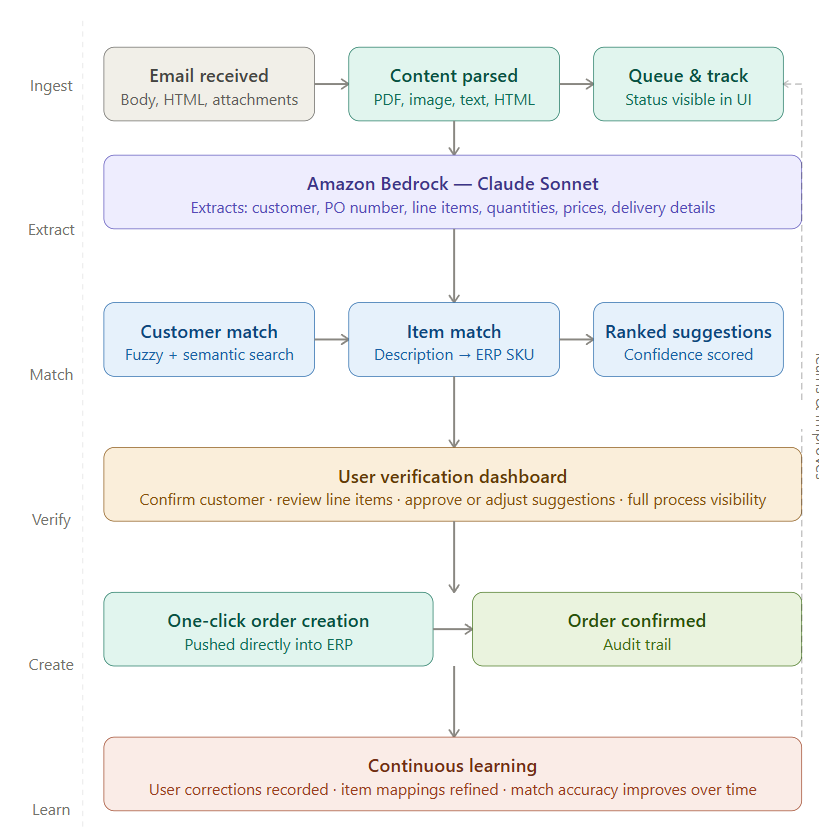
Figure 4: End-to-end process flow: ingest, extract, match, verify, create, and learn
The solution handles orders in multiple languages. French-language purchase orders from Quebec, for example, flow through the identical pipeline as English orders without additional configuration. Claude’s multilingual capabilities handle French extraction natively.
Results and impact
All metrics below are from Oldcastle APG production data.
“By integrating Amazon Bedrock into our order-entry process, we achieved substantial gains in efficiency and a marked reduction in human error. This initiative has been widely embraced across the organization and stands out as one of our most positively received digital-transformation implementations.”
— Jessica Vincent, Vice President Business Solutions, Oldcastle APG
Key results:
- 1,100 orders and 10,000+ order lines processed in the first two weeks of production. This represents roughly 170 hours of manual effort redirected to higher-value work.
- 95% of lines are fully automated. The remaining 5% are flagged for CSR review.
- Less than $0.04 per page processing cost.
- 8-week delivery with a team of 2 developers and 1 architect.
This pattern fits manufacturers that receive purchase orders in variable formats. It works best where CSRs bridge the gap between customer documents and the ERP. The larger the product catalog and order volume, the stronger the fit.
The higher the order volume and the more varied the PO formats, the stronger the ROI. For Oldcastle, the cost of AI processing (less than $0.04 per page) is a fraction of the cost of a CSR manually keying the same data. The 8-week deployment timeline means the payback period is measured in weeks, not years.
The human-in-the-loop design means you do not need 100% accuracy to go live. Start with the document type that consumes the most CSR hours, prove the value, and expand from there.
Conclusion and next steps
With the core order entry pipeline in production, Oldcastle is extending the pattern to adjacent workflows. Purchase orders and delivery notes from the receiving process are next. Oldcastle is also routing orders from major retail partners for automatic staging. Each new workflow reuses the Amazon Bedrock-powered extraction engine, cutting the incremental build effort to weeks.
The same approach works for document-heavy workflows more broadly. Start with your highest-volume document type and a sample of 50 to 100 orders. Contact your AWS account team to scope a proof of concept, or explore the Intelligent Document Processing on AWS solution.