Engineer creates retro FPGA Game Boy console that can rip your cartridges to an SD card natively — features HDMI, USB-C, and even has Game Link Cable support
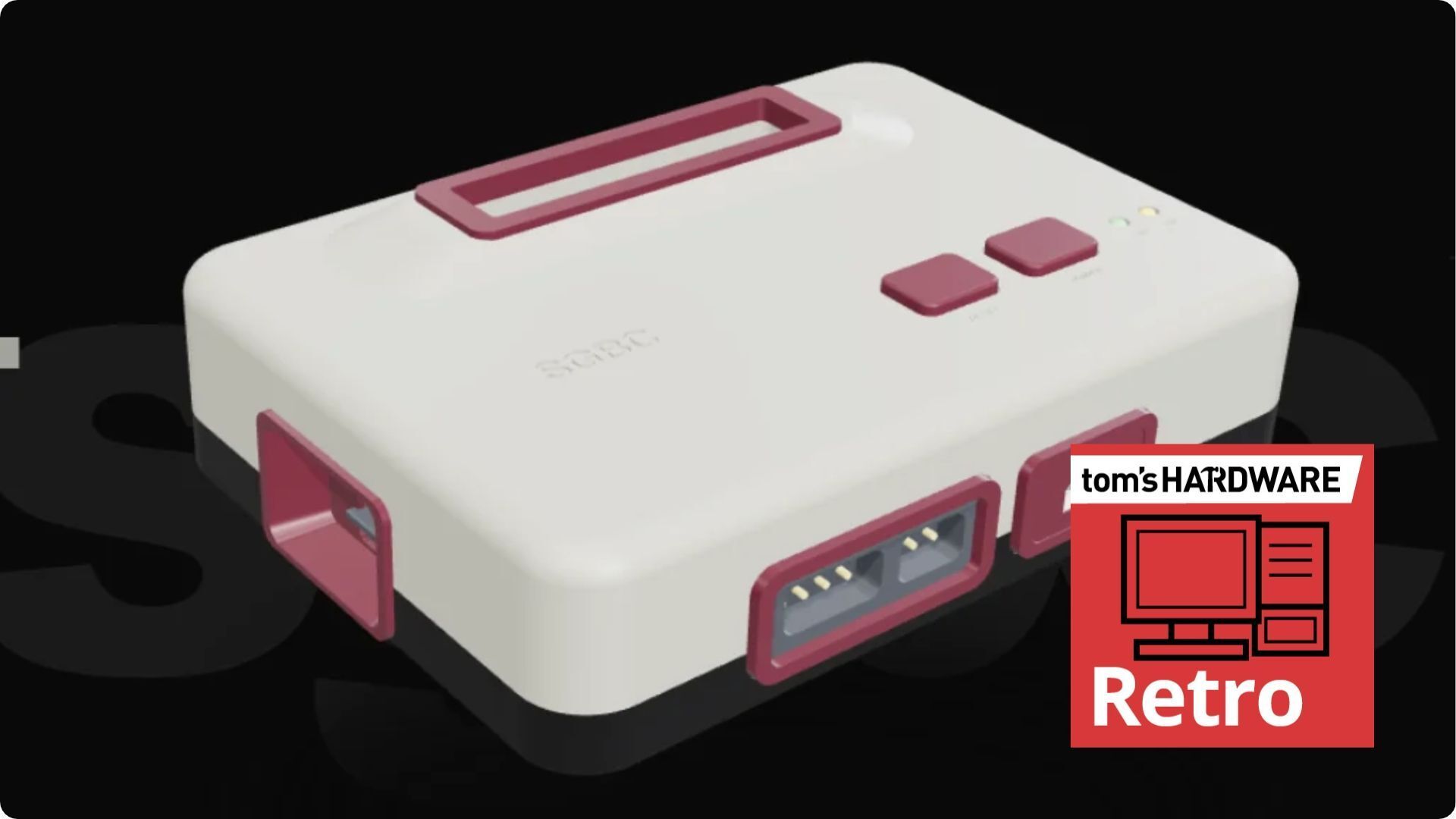
Joining the retro console revival movement is the SGBC, a new console that can play Nintendo Game Boy cartridges natively using an FPGA core. Built by Thomas Sanfourche, a French electronics engineer studying in Taiwan, the SGBC aims to give players a way to preserve and play their games with the full Game Boy experience, including a link port for multiplayer and trading.
The SGBC uses a Field-Programmable Gate Array (FPGA), a reprogrammable chip that can be configured to replicate the hardware logic of another chip, in this case, the Game Boy’s hardware. It can replicate not just the CPU, but multiple other components of a Game Boy as well, but Sanfourche has yet to specify which of the original Game Boy’s ICs have been consolidated into the FPGA.
The SGBC doesn’t just replicate the Game Boy as a console; it has plenty of features that retro gamers would appreciate — the most interesting among them being the built-in cartridge ripping function. If you insert your favorite Game Boy cartridge into the SGBC’s slot, you can preserve it by copying the ROM onto the microSD card in the console, digitizing your collection. It also outputs in 1080p 16:9 without stretching, and uses integer scaling to keep the game's pixels aligned with the pixels on your monitor or TV through HDMI. The SGBC also features an SNES controller port and a Game Boy Link port for multiplayer and trading.
Thomas Sanfourche almost ditched the SGBC entirely; in an interview with French retro gaming YouTuber GyuGyu, he said he went to Taiwan to study electronics engineering after discovering his strong interest in electronics. He didn’t know the local language and couldn’t enrol without certification, so he gave himself two years but ended up getting the language certification in six months. In his second year, he chose to enrol in the FPGA course after being intrigued by the name, and eventually chose it as the subject of his final-year project — a Game Boy FPGA core.
Sanfourche said his project was dismissed when he presented it to his professors: “What’s the point of doing this on an FPGA?” he was asked. This discouraged him and stopped him from working on it — until one day he went to a warehouse to buy a PVM monitor and struck up a conversation with a fellow customer who was a retro product seller and very active in the local retro scene. The discussion eventually led to his FPGA core Game Boy project, to which the seller asked, “Why don’t you market it?” The supportive stranger then offered, on the spot, to finance the equipment needed to market it or at least bring the project to life. The financier told Sanfourche he doesn’t want to be a part of the business, but that he wants to resell the product when he releases it, further supporting the project by sharing updates and teasers to local retro enthusiast Facebook groups.
The SGBC is yet to be released, but the project joins other FPGA consoles by the likes of retro gaming modding YouTuber Taki Udon’s SuperStation One, ModRetro’s M64, and Analogue’s SuperNT+ and MegaSG+. Not only are projects like these reviving the platforms, but they are also giving them modern features and comforts, bringing the question “What if these consoles were built today?” to reality.